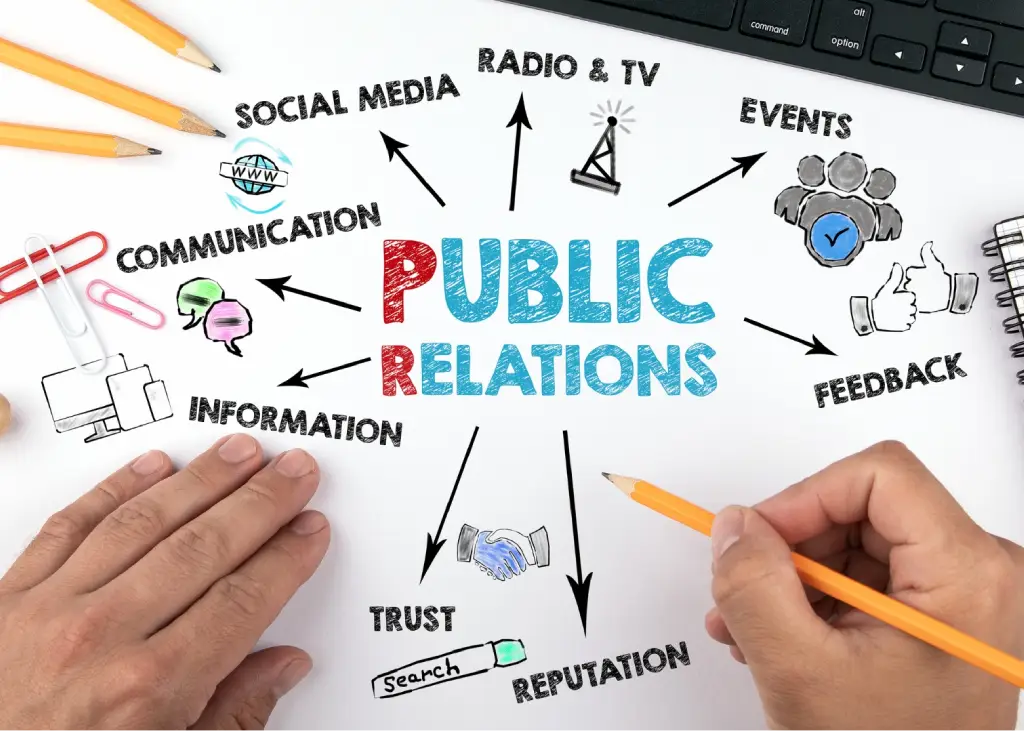
The concept and function of public relations (PR) have become increasingly crucial in the recent transition from traditional marketing to an integrated marketing strategy.
Public relations (PR) is an important component of integrated marketing communication that helps companies successfully and authentically reinforce their message across multiple platforms.
The potential of PR to help businesses achieve their goals while establishing a strong presence and image defines it as a potent management tool.
However, the full potential of PR and publicity is frequently overlooked and underutilized. mostly as a result of a lack of knowledge about the scope of PR’s potential and limited understanding of what it actually is.
The combination of PR and marketing is more important than ever in today’s digital environment, with an increasing emphasis on establishing credibility, upholding a solid reputation, and thwarting false information at a time of swift information dissemination.
We’ll discuss six benefits of public relations in this article for your consideration:
PR is fundamentally about controlling communication between a company and its target audiences. A corporation must convey a consistent narrative that embodies its values and objectives to all of its stakeholders, including the media, investors, workers, and consumers. Businesses may affect how the public views their brand by implementing smart PR initiatives.
Effective PR strategies focus on crafting narratives that align with the company’s objectives and resonate with the target audience. This might mean telling tales, collaborating with the media, managing difficult circumstances, or becoming active in the community—all of which contribute to the development of a more robust and favorable brand image.
When a new product is introduced, for example, a well-thought-out public relations strategy may generate enthusiasm, educate the public, and give the product a distinctive appearance. PR makes sure that the product is perceived in the market not just as a buyable commodity but also as one of worth and significance through press releases, media coverage, and astute partnerships.
Establishing trust and dependability is one of the major advantages of PR in terms of enhancing brand reputation. Third-party validation through media coverage or influencer endorsements may be more successful because consumers are wary of marketing. A company’s message gains credibility when a reputable writer, influencer, or industry expert speaks favorably about it.
PR firms put a lot of effort into building solid relationships with media outlets, journalists, and influencers in order to obtain such chances. Earned media attention is crucial to a brand’s image since it positions the business as a reliable authority in its industry. Additionally, PR helps companies manage their internet image by swiftly and effectively addressing unfavorable news or false material, maintaining the brand’s credibility and dependability in the eyes of the public.
Trust must be preserved for businesses operating in a big market like Delhi, where there is fierce rivalry and high customer expectations. This is one of the reasons a PR agency in Delhi may be helpful in providing local knowledge in terms of media terrain experience and developing a reputation based on dependability and credibility.
Reputation is a long-term asset for a brand. In order to protect and develop it, PR is essential. Positive interactions over an extended period of time build a company’s reputation. However, a single error may ruin a reputation that took years to establish. PR specialists handle these situations, whether they include a product flaw, bad news, or social media criticism. They manage the harm and lead the story in the proper direction.
Managing Damage control is only one aspect of effective crisis communication; another is demonstrating the brand’s dedication to its principles in the face of adversity. For example, companies that respond to disasters quickly and sympathetically tend to have even better reputations. During a crisis, the capacity to manage the story may transform a potentially harmful circumstance into a chance for development and education.
If media outlets have positive things to say about your business, you are gaining people’s complete trust. A crucial component of PR is media relations. It has a direct impact on trust and brand reputation. Building credibility requires third-party validation, which comes from favorable media coverage. A brand’s authority in its sector is strengthened when reputable journalists or magazines discuss it, its inventions, or its contributions.
Here, PR experts are really helpful. They establish and preserve connections with media organizations. This enables businesses to guarantee that their brand is presented truthfully and favorably. PR teams may spread the brand’s message to a larger audience by obtaining interviews, articles, or features. Because they originate from reliable sources, these earned media mentions frequently have a greater impact on consumers than sponsored advertising.
In 2025, the PR sector is being shaped by new developments. Influencer marketing, social media, and interactive content will all work well for businesses because they make use of every opportunity to build a personal relationship with consumers and maintain a positive brand image.
Furthermore, PR has developed into a dynamic fusion of cultural sensitivity, technology, transparency, and narrative. PR practitioners are navigating a more fascinating and complex environment than ever because of AI technologies, social media, and an increasing need for authenticity.
Social media, events, and content marketing are important areas where PR and marketing successfully converge. Events generate media attention and help to preserve good connections with the community. In both PR and marketing campaigns, content and social media posts—whether sponsored or not—play important roles in advancing brand narrative and consumer engagement.
PR fosters long-term connections with important stakeholders in addition to handling crises and raising awareness. These connections, whether with clients, staff, investors, or the community, are essential to developing a favorable brand image.
PR campaigns frequently concentrate on employee interactions, community involvement, and corporate social responsibility (CSR) programs, all of which enhance a business’s reputation in the community. Businesses may increase audience loyalty by presenting their brand as one that values social impact.
Furthermore, effective PR maintains the brand’s awareness among stakeholders primarily through ongoing communication, such as newsletters, in-person appearances, or media conversations. This ongoing communication is essential to preserving and enhancing the connections that can support a company’s long-term viability.
In today’s fast paced digitally connected world, PR is no longer just about visibility or media relationships; it is about building credibility, trust, and lasting relationships. When used strategically, PR becomes a powerful force in shaping brand reputation and sustaining long-term brand value.
At The Delhi School of Communication, students study Public Relations with experienced industry professionals. A thorough curriculum combining conceptual learning and practical industry experience enables the students to navigate smoothly through this dynamic industry.