Choosing a career path can be among the most critical decisions in a students life. As the media landscape expands, numerous sectors have opened up; such as news channels, digital media, advertising agencies, entertainment agencies, OTT platforms, PR agencies, Radio Media, and Social Media, all exciting and lucrative. Mass Communication as a discipline has become among the most lucrative and exciting fields at present. However, with various courses and streams available, it becomes highly confusing for a student to decide which stream he or she should specialize in. The subsequent article will help you get insights on methods and procedures on selecting the best course in Communication and the numerous career paths available therefrom.
Mass communication primarily refers to information production and dissemination via various forms of media. The intention is reaching as many people as possible. These various forms of media include:
Among others.
A career as a media and specialist might be suited for someone with interests involving creativity, storytelling, communication, and interactions with media technologies. An individual looking to join a dynamic and ever evolving field; who wishes to create impact through stories belongs to the world of Mass Communication
A strong and leading course in communication can become an important launch pad for a student and also open gateways in the industry in leading brands and organisations. Before embarking on course selections it’s important to discover what aspect of communication you would best be suited to. To answer this question, start by asking yourself the following questions:
Your interests will enable you to make a determination on whether you would like Mass Communication as your programme or as a programme with specialisations in fields such as Advertising, Public Relations, Digital Media, and Journalism among others. Both have their pros and cons. Although a general programme in Communication will do you good, selecting a programme with specialisations will endow you with essential skills within a specific field or fields, making you stand out from the rest. It will provide you with an edge with your skills set and sharp acumen. At Delhi School of Communication (DSC) we cover the entire bandwidth of Marketing Communications while also specialising in Advertising, Public Relations, Digital and Marketing.
A Mass Communication course should have more relevance beyond mere theoretical knowledge. It should include projects of a practical nature such as workshops, live case studies and industry projects. Looking at todays day and age, the curriculum needs to be vastly upgraded with inputs of technology and AI. Some aspects that should be part of any good communication programme include:
A strong curriculum will empower you with all the skills required to move about with confidence within the media and business sectors.
Internships form the backbone of any dynamic sector. It should form an integral part of Mass Communication Education. The media sector values experience and skills. As such, it would be appropriate to choose a course where:
At DSC, internships allow our students to better understand the working environment and help improve their portfolios. Students have also been offered pre-placement opportunities at these internships. At DSC, paid internships are provided at the under-graduate and post-graduate levels with the world’s best organisations, be it advertising agencies, PR agencies, Media planning agencies, and digital and marketing agencies. At DSC, more than 60 percent internships get converted into PPOs within 5 months before completion.
Also read: Why is Mass Communication Essential in Media & Marketing Courses?
A good college will provide a strong placement system that allow students to get hold of their preferred offer. It should include
– Advertising agencies: Ogilvy, Social Panga, Dentsu, McCann, Havas Media,
– PR Agencies: Adfactors PR, Edelman, Genesis BM, MSL, PR Pundit
– Media Organizations: Hindustan Times, NDTV, India Today
The Corporate Communication departments of reputed companies Digital Media Agencies, Production Companies among others. At DSC, our students are matched with the above and many more among the best agencies and organisations. Placements and internships with these organisations greatly improve your resume.
Course Quality: The presence of quality instructors and facilities goes a long way in influencing the overall quality of a course. It would be highly desirable to look for professionals with expertise in media.
Those faculty members who have obtained critical industry experience and then opted for higher education will be able to provide better training to the next generation of leaders with communication expertise. The faculty should ideally include a combination of industry and academic stalwarts.
– Professionals with experience from the industry
– Educators who are aware of the latest technologies and trends
– Educators and professionals who are engaged with various projects in media and communication.
The faculty and guest lecturers should have the above qualities to be able to prepare students for the future. Effective faculty members not only offer good teaching but also act as mentors and career guides for students as well as a link to the industry.
Having an impressive alumni base is a testament to the success of a programme. Key parameters about any mass communication programme with reference to Alumni include:
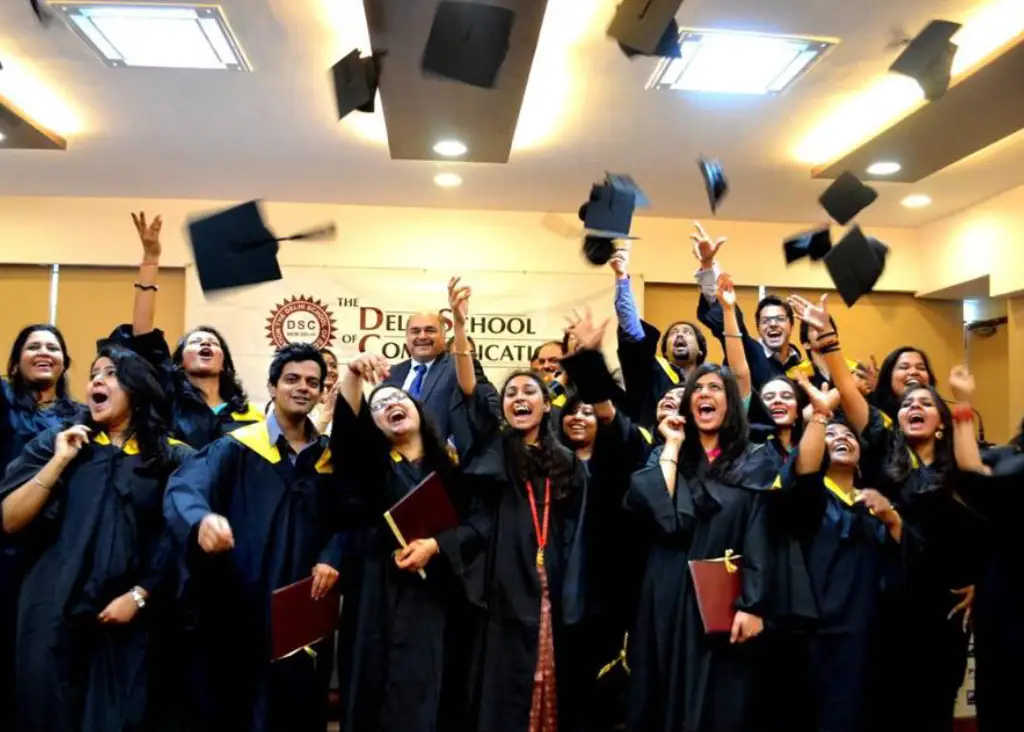
Alumni who are working with honor-linked businesses and who often return to help with mentoring tutoring are a very reassuring thing. The Delhi School of Communication is constantly flocked by Alumni who are seeking to reconnect with their Alma Mater and share and engage with young minds. Top industry leaders to mid-management level Alumni, be it from Advertising, Public Relations, Digital, Marketing, Branding come and engage and collaborate.
A career in Mass Communication allows for creative freedom. You get opportunities to work in a range of fields, including online media, advertising, public relations, film production, and business communications. The fact is, there is a large market for people who deal with communications. Excellent opportunities for internship and job placement. Professional advancement occurs much quicker, and it’s particularly rapid within online realms. A very strong personal brand can be created around yourself.
By making the right choices with regards to courses and institutions, a degree in Mass Communication can result in some of the most exciting and prestigious career avenues.